Process analysis

The work mapped and clear where it can improve

In conversations with the people who do the work, we map a process with our software, BMS (Business Model Software). The map reads like a story, step by step, and the people who do the work correct it where things go differently.

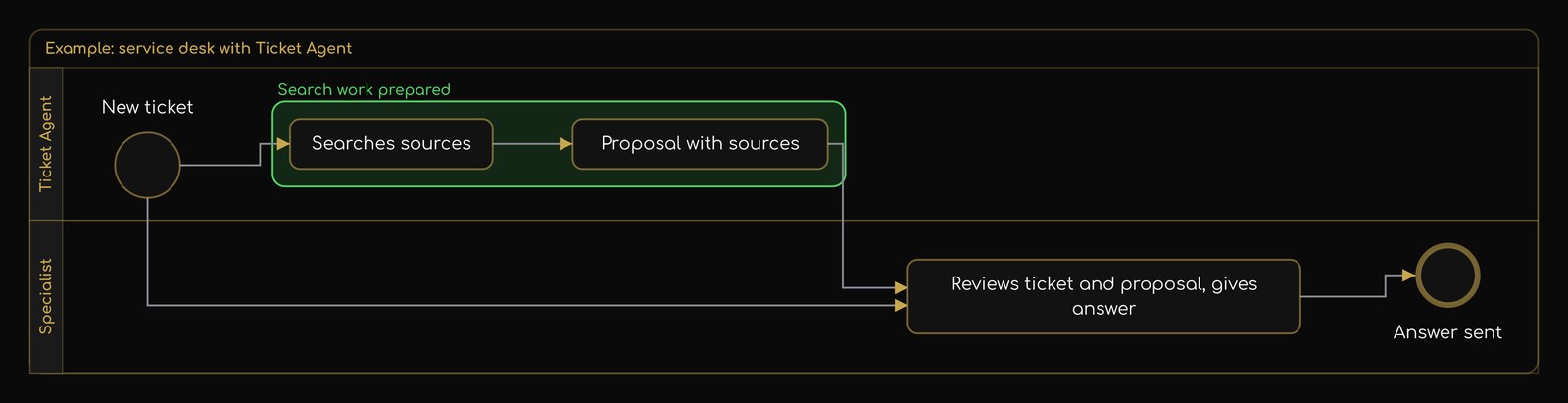
This is BMS itself. The map has two pages: how it works now, and the same service desk with the Ticket Agent.Open the map full screen

What it delivers

A map everyone can read

The process map

Who does what, in which order, and where the work passes from one person to the next.

The story per step

A short explanation in everyday words at each step, so that even people who were not there understand it.

Bottlenecks and opportunities

Where work stalls or keeps being figured out again is marked on the map.

Advice per step

Keep it as it is, automate, use AI or let a person decide. With the reason included.

A substantiated direction for improvement

What the first improvement will be: a different agreement, better use of existing software or a new application. The maps of the work examined remain available.

How it works

From conversation to improvement

The conversation

The team explains how the work is done. BMS maps it and we ask further questions when a step is missing.

Correcting together

Together we read the map back and point out what happens differently. The agreed version is the basis for everything else.

Choosing what fits

For each step, we determine what changing it would deliver. Sometimes that is a better agreement, sometimes automation, sometimes AI.
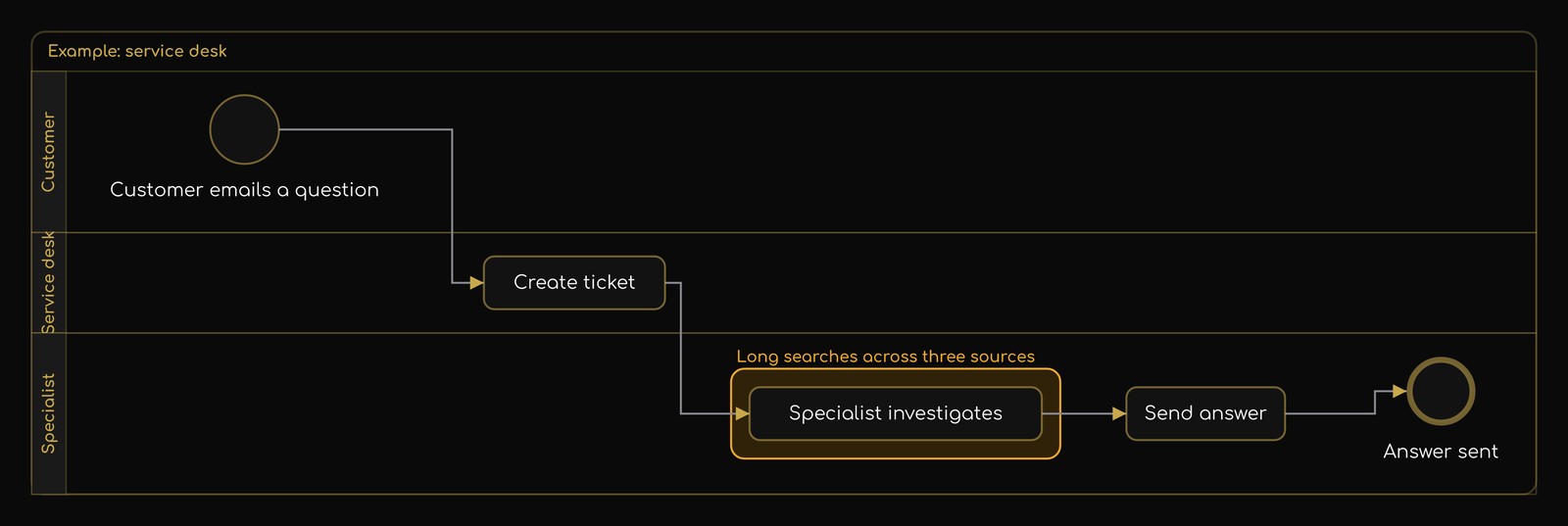
BMS map: how it works now
How it works now: the specialist's searching is marked as the bottleneck.
BMS map: with the Ticket Agent
How it will work: the Ticket Agent prepares the searching, the specialist decides.

Contact

What shall we map first?

In the first conversation, we hear which process takes the most time and how a process analysis would work there.